Introduction — Context
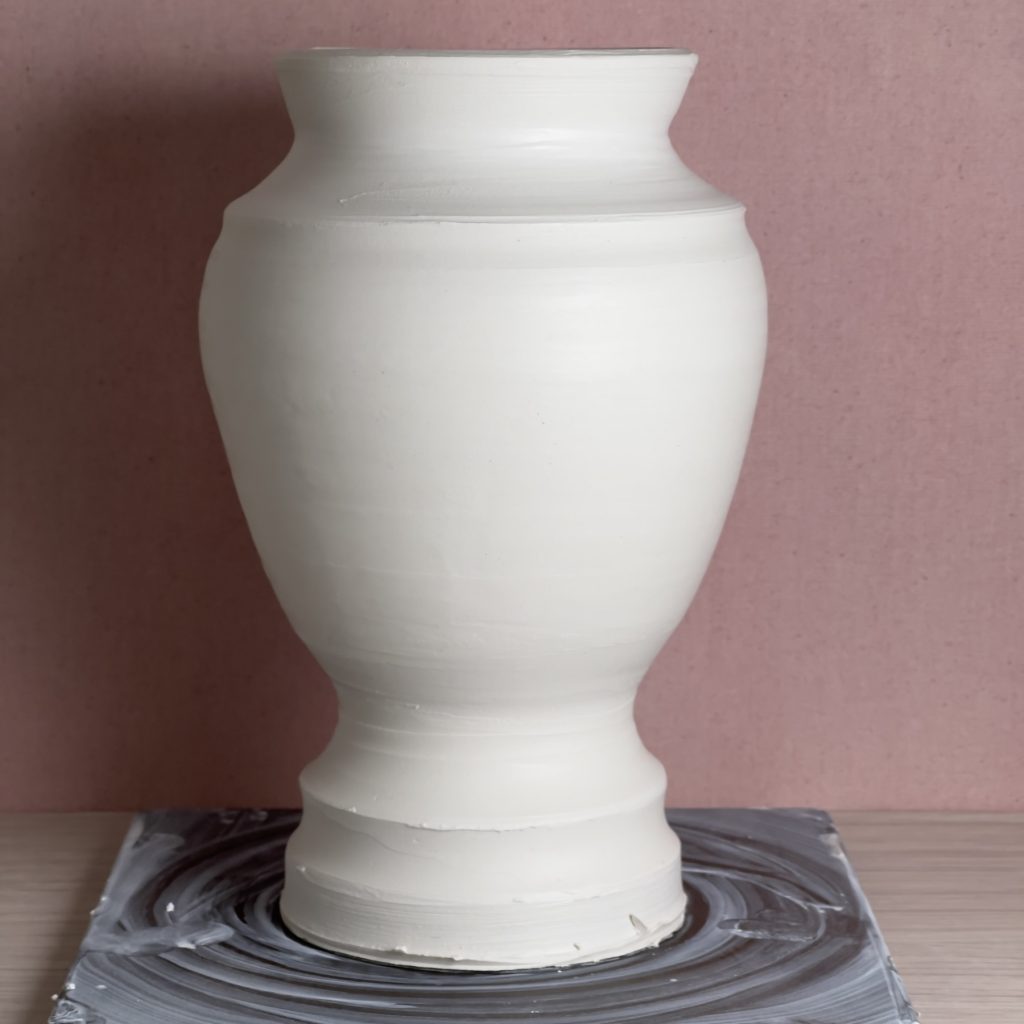
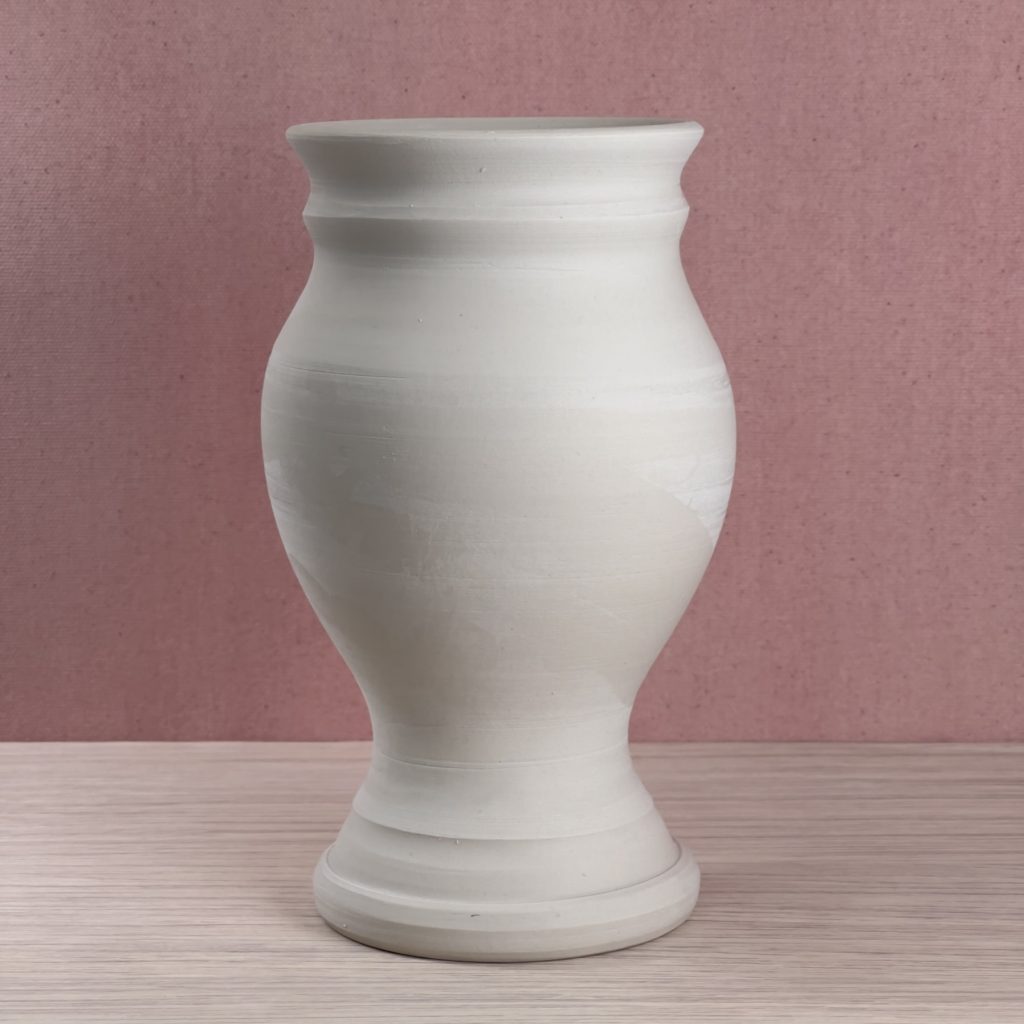
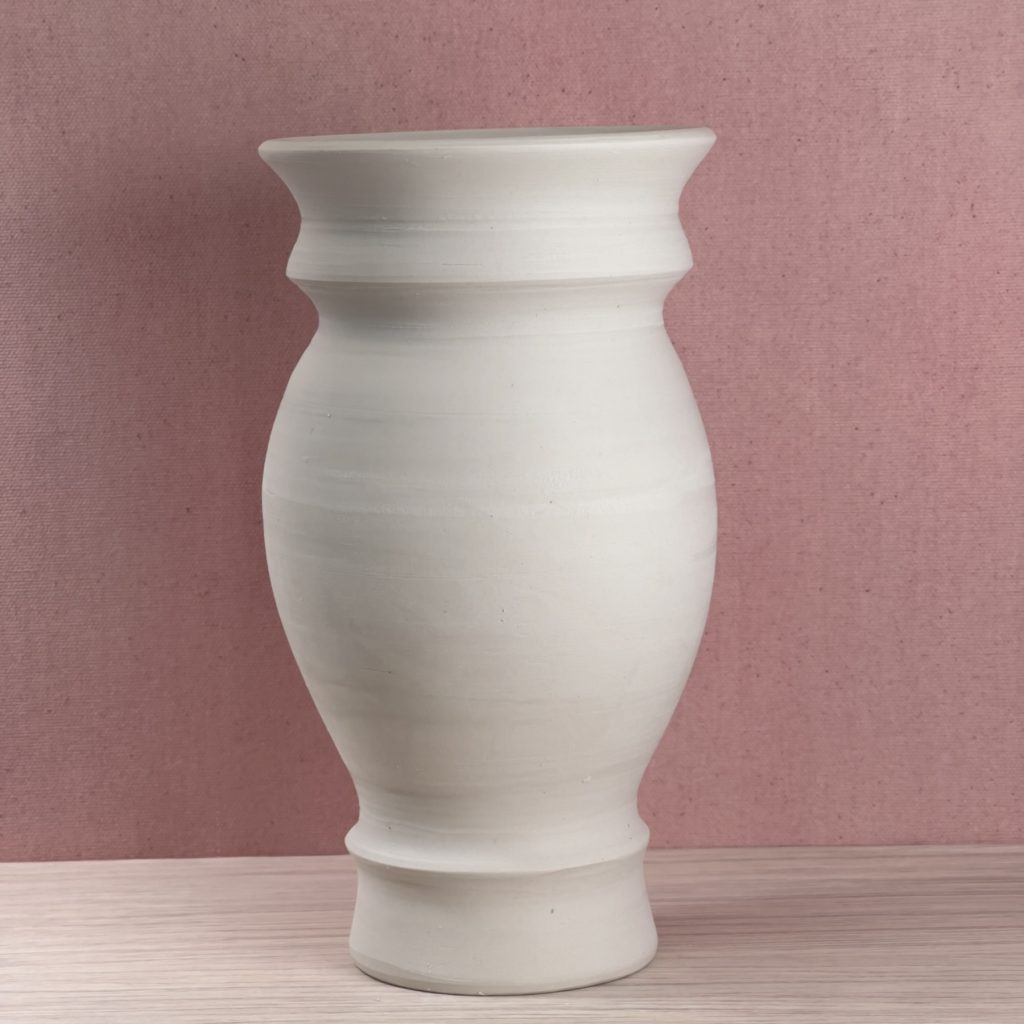
This eighth challenge led me to work with more elongated forms, but also more demanding ones. The goal was not simply to increase height, but to maintain a clear presence in the form, without allowing the silhouette to become soft or fragile.
This work took place under somewhat particular conditions. I was using recycled clay that was not yet perfectly homogeneous. These irregularities required constant attention, and some pieces called for unexpected decisions.
One of them had to be cut at the neck after I encountered a hard fragment. This somewhat abrupt gesture reminded me that not every piece is meant to survive — but that they all take part in the learning process.
Clay can be recycled. Experience remains.
The Intention of the Challenge
With this challenge, I wanted to understand how to build an elongated form while maintaining a sense of grounding. I wanted to work with the relationship between three essential areas:
the foot, as the point of support
the belly, as the center of presence
the neck, as the upward direction
Rather than thinking of these parts separately, I tried to connect them through a visual continuity — a kind of internal trajectory that naturally guides the eye.
The issue was not only height, but coherence.
The Difficulties Encountered
As the pieces developed, one difficulty appeared repeatedly: my bases remained too thick. By observing my gesture, I realized that I was narrowing the form too late in the process. The wall would open slightly during the pulls, and then I would try to correct it afterward. This late narrowing brought mass back down toward the bottom, creating heavy bases that then had to be lightened during trimming.
This realization marked an important moment. It was not a lack of control, but a question of timing. The form needed to begin earlier than I had thought — from the very first pulls. This awareness led me to consider a temporary return to more modest amounts of clay, around 1.5 lb, in order to explore tighter bases without fear of collapse.
Adjustments During the Work
Some pieces required unexpected formal decisions. In one case, a neck that had become too dominant was balanced by narrowing the foot, in order to recreate continuity between the masses. In another, a piece had to be stopped after a hard fragment was found in the wall.
These situations reminded me that a form is never fixed. It is built through successive adjustments, sometimes subtle, sometimes more radical. Little by little, I began to feel the internal logic of the forms more clearly: not correcting them after the fact, but guiding them from the start.
What This Challenge Is Teaching Me
More than height itself, this challenge is teaching me restraint.
Learning to contain the form from the beginning.
Learning to decide earlier.
Learning to leave mass where it is needed — and only there.
I understand more clearly that verticality is not only a matter of elevation, but of balance between tensions. Some pieces were lost along the way. Others held their ground. All of them helped refine my eye. And perhaps the heart of this work lies there: learning to see before even wanting to succeed.
Moving Forward
The next step will be to continue these explorations with perfectly homogeneous clay, in order to observe how these adjustments translate when the material cooperates more fully.
I want to keep working with tighter bases, and observe how mass moves when the narrowing happens earlier in the process.
The challenge continues, piece by piece — with patience, and with attention.